
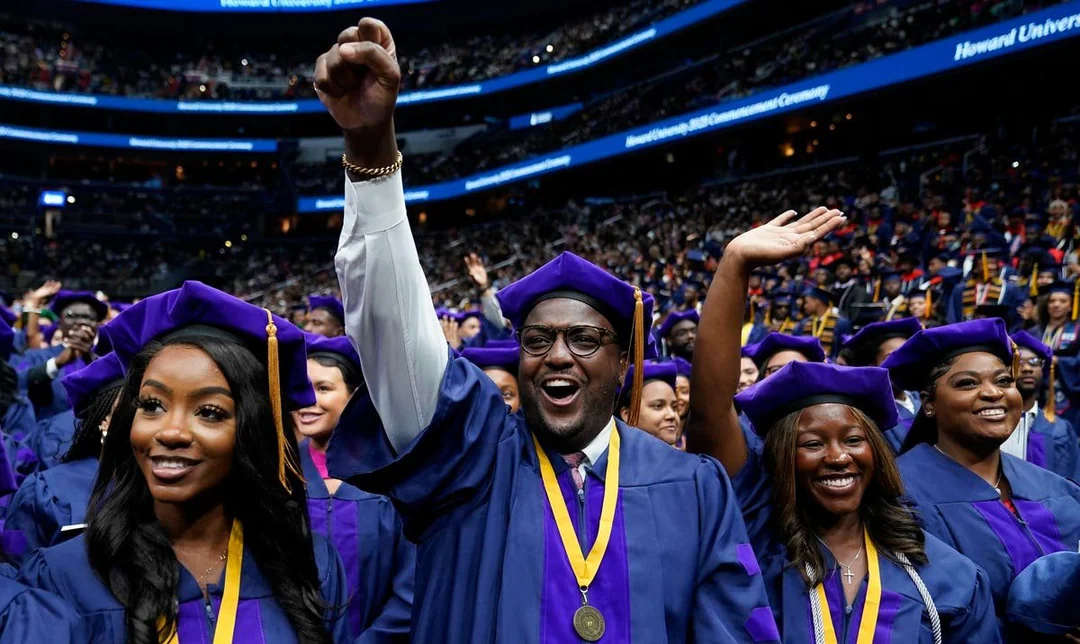
Historical Black Colleges and Universities
Where CULTURE and EDUCATION unite and ascend!

Four L’s of Leadership – Paul Quinn College
Dallas, Texas

leave KNOWLEDGE
lead with INTEGRITY
live in PURPOSE
love UNCONDITIONALLY
Culture…Education…Pride in SELF…Community…Safety…Leadership…Network…. These key elements identify who we see and what we know when a Historical Black College or University comes to mind and becomes an option. Public White Institutions (PWI) provide similar experiences but lack the diaspora of black culture. Knowledge is a focal point for any student and alumni. However, the cultural experience associated with an HBCU garners a different view and version of yourself that elevates through exposure! There’s a multitude of subjects, physical or mental, that will catapult your career in a structured amount of time. No one knows everything but every day we all have an opportunity to learn something new. We have free education systems everywhere, i.e. YouTube, monikered YouTube University, being one of the online avenues. Attending college is an expectation and, for some, mandatory. Certain career fields such as anything STEM including medical, engineering, law, finance or education require certificates and/or degrees. If college is not on your radar due to financial restraints, mental overstimulation or vision for self is still unclear, don’t feel dismayed because there are alternative programs available to further advance your education. Trade schools are a viable option and require less financial backing and less time for graduation. Certificate programs are important as well and can allow you to test the waters before you fully submerge yourself in a career education in the field you feel most comfortable. Once you figure out what direction you’re headed in, don’t be afraid to stack multiple degrees and certifications. You can NEVER have too many!

When you’re attending a HBCU, there’s a familiar comfortableness in the atmosphere. You see people that look like you, act like you and may even think like you. You’re all there for mostly the same reasons, to educate in culture, to cheer each other on and graduate, to build lifelong friendships that turn into family and ultimately, have networking connections that last a lifetime. You have the Divine 9, fraternities and sororities, who focus on education, scholarship, culture, community impact and leadership development. Life on campus includes step shows, parties, cultural events and other community outreach. Life outside of campus include continuation of culture, community impact, leadership development through mentorship, and pathways to employment through network and class reunions.

Applying to College
Texas
- Research and explore career(s) interests and forecasted outlook.
- Take the ACT/SAT college readiness tests while in high school.
- All Texas students can apply to all available Texas colleges and universities through one website, Apply Texas. This site also offers a career quiz and helps you navigate potential career options and programs.
- Scroll down further to see resources for options.
- Also check out resources for studying abroad.
- Scroll down further to see resources for options.
- All students must apply for financial aid prior to enrollment.
- The Free Application for Federal Student Aid (FAFSA®) is the federal aid application. Be sure to narrow down the schools and obtain each school’s ID number prior to application completion.
- Texas Application for State Financial Aid (TASFA) is the state aid for students who do not qualify for federal financial aid.
- Scholarships and grants.
- Scroll down further to see resources for options.
- Research work study or work pathway programs offered by the college.
- Loan options are also available.
- private/public, subsidized/unsubsidized
- The Free Application for Federal Student Aid (FAFSA®) is the federal aid application. Be sure to narrow down the schools and obtain each school’s ID number prior to application completion.
- Once the student is accepted into college, their financial package may include the following items:
- Housing – on campus/off campus
- Meal plan – on campus
- Additional items needed to prepare the student includes:
- Medical insurance – private/school/athlete
- Vaccinations
- transportation
- Laptop and other degree specific resources, i.e. scrubs
HBCUs in Texas
Current 9 sites listed below
*as of 2026, tuition is based on multiple factors. Verify directly with institutions.
Paul Quinn College – Dallas, TX Tuition – in state $10.458 | out of state $10,458
Huston-Tillotson University – Austin, TX Tuition – in state $$14,346 | out of state $$14,346
Jarvis Christian University – Hawkins, TX Tuition – in state $11,720 | out of state $11,720
Prairie View A&M University – Prairie View, TX Tuition – in state $11,299 | out of state $26,874
Southwestern Christian College – Terrell, TX Tuition – in state $6,819 | out of state $6,819
St. Philip’s College – San Antonio, TX Tuition – in state $3,412 | out of state $9,952
Texas College – Tyler, TX Tuition – in state $10,008 | out of state $10,008
Texas Southern University – Houston, TX Tuition – in state $9,173 | out of state $21,473
*Thurgood Marshall School of Law
Tuition – in state $45,072 | out of state $52,295
Wiley University – Marshall, TX Tuition – in state $12,500 | out of state $12,500
National HBCUs

- Full list of HBCUs
- Official List of HBCUs
- Find a HBCU Online School | Degree Programs
- Top 20 HBCU Graduate Programs
- HBCU Schools Offering Master’s Degrees
- HBCU Law Schools
- A Comprehensive Guide to HBCU Law Schools
- The Four HBCU Medical Schools
- 2 new schools coming soon
- HBCU Medical Schools
- HBCU Medical Schools: Discover Your Future in Medicine
HBCU Resources

Higher education takes planning and finances!
Some resources available below.
- HBCU Scholarships for 2026–2027
- HBCU Scholarships
- Top 31 HBCU Scholarships in May 2026
- The Ultimate List of HBCU Scholarships for 2026
- HBCU Scholarships: Fund Your Future with Confidence
- HBCU Scholarships 2026-2027
- Scholarships – National HBCU Alumni Alliance
- HBCU Buzz | Leading Source of HBCU News
- MacKenzie Scott HBCU Donations
- Fund HBCUs for Both Today and Tomorrow
- HBCU Endowments – Interactive Map
- Master’s Degree Programs at HBCU through Dept of Education
- List of colleges and universities endowment
Scholarships, Grants, Financial Aid
*The lists below are NOT exhaustive. New opportunities become available often.
Texas
- My Texas Future
- Workforce Innovation & Opportunity Act (WIOA)
- Texas Scholarships – Scholarships.com
- Texas Scholarships and Other Financial Programs
- Scholarship360 – Texas top 201
- Texas Higher Education Coordinating Board
- Houston Livestock Show and Rodeo | Scholarships & Grants
National
- U.S. Department of Education
- Federal Student Aid
- U.S. Department of Education | Grants
- United Negro College Fund UNCF
- Fastweb | Scholarships
- Fully Scholarships 2027
- Fulbright Scholarships2027
- Finaid | Your Guide for College Financial Aid
- ScholarshipOwl: batch scholarship applications
- Military OneSource | Education Grants, Loans, Scholarships
- College Board
- Big future Scholarships
- Scholarship Search – BigFuture | College Board
- Bold.org | College Planning Made Simple
- CareerOneStop
- Scholarships for Women | Soroptimist’s Live Your Dream Awards
- Jeannette Rankin Scholarship Fund
- Dental Assisting National Board (DANB) Scholarships
- American Dental Assistants Association (ADAA) Scholarships
- National Dental Association Foundation Scholarships
- American Student Dental Association (ASDA)
- Dental Trade Alliance Scholarship
- Scholarship help from Carlynn Greene
Texas Education Options
Full list of ALL Texas Colleges,
Universities and Trades
- Texas Colleges and Universities
- Texas Colleges and Universities | Interactive Map
- Tuition-Free Online Colleges
- 4-year Colleges Offering Free Tuition Based on Family Income
- 12 Texas Colleges That Offer Free Tuition
- Dallas Per Scholars IT Education
- Texas Association of Community Colleges
- 2026 Best Trade Schools in Dallas-Fort Worth Area
- Best Trade Schools in Texas 2026 and Salary Outlook
- Texas Workforce Commission apprenticeship program
- Accelerated Nursing Program in Dallas – Concordia Texas
- Accelerated Nursing Degree | Texas Tech University Health Sciences Center
National Education Options
Full List of US Colleges and Universities
- Complete USA Guide Colleges and Universities by State
- Top Universities in the United States
- An A-Z List of U.S. Colleges and Universities
- Accredited Colleges
National Online Options
- 25 Best Accelerated Nursing Programs Online
- The Best Accredited Online Colleges of 2026
- Western Governors University – Self paced accelerated
- Capella University – Self paced accelerated
- Independent Electrical Contractors (IEC), Inc IEC Fort Worth Chapter
- Dallas Leadership Foundation– free construction electrical training – Dallas County only
- CLC, Inc. – Training & Employment
- Goodwill North Central Texas
- Workforce Solutions for the Heart of Texas
- Workforce Solutions Greater Dallas
- Construction Education Foundation (NTCEF)
- KD Conservatory Studio Film, Musical Theatre. Acting School
National Skilled Trades
and Apprenticeships
- List of All Trade Schools in the USA
- Trade Schools Directory
- Texas Trade Schools
- TradeCollege.org
- Trade School
- Trade School Programs
- Path to Pro Skills Program – Home Depot free training
- Apprenticeship.gov
- Generation USA
- Job Corps
- International Brotherhood of Electrical Workers (IBEW) Union Directory
- TWIC® | Transportation Security Administration
- YouthBuild
International Study Abroad
Education Options
- World Higher Education Database (WHED) Portal
- Find Your Perfect University | UniAtlas
- QS World University Rankings: Top global universities
- 40 Best International Colleges for US Students – 2026
- Most Popular International Universities Among U.S. Students
- Best International Colleges for American Students 2026
- Top 50 Free International Universities for U.S. Students
- Find every FAFSA-eligible school in the world
Unique Careers
- 25 Creative Jobs & Careers for Creative People
- The 15 Best Careers For Creative People
- 75 Unique Careers
- 23 Low Profile Jobs
- 41 Unique Jobs
Professional Trade Organizations
and Resources for Networking
Healthcare
- National Medical Association (NMA)
- Black Healthcare and Medical Association (BHMA)
- Sinkler Miller Medical Association
- Black Revolutionary Collective
- National Black Nurses Association
- National Black Nurse Practitioner Association
- Black Nurses Rock
- List of Healthcare Careers
- Ultimate List of Healthcare & Medical Careers
- 200 Career Paths in Healthcare
Law
- National Conference of Black Lawyers
- The National Black Lawyers
- National Bar Association
- List of 76 Top Legal Careers
Finance
- Association of African American Financial Advisors
- African American Alliance of CDFI
- Explore Your Finance Career Path – CFI Career Map
- 200 Exciting Career Paths in Finance
- Popular Careers in the Financial Sector
Education
- Texas Alliance of Black School Educators (TABSE)
- National Alliance of Black School Educators (NABSE)
- Center for Black Educator Development (CBED)
- Black Teacher Project
- Black Educators Matter
Aeronautics
- Organization Of Black Aerospace Professionals (OBAP)
- Sisters of the Skies (SOS)
- NASA Organization
- National Business Aviation Association
- Aviation Organizations – AOPA
- IATA
- Aerospace Industries Association
Science, Technology, Engineering, and Mathematics (STEM)
- National Society of Black Engineers (NSBE)
- List of Best STEM Jobs
- List of STEM Careers
- Engineering Career Options Explained
- Engineering-careers
Conferences
- STEM Conferences
- Education Conferences
- Education Conferences
- Finance Conferences
- Finance & Fintech Conference
- AI Conferences
- AfroTech
Creative Arts, Film
and Entertainment
National Resources, Courses
and Certificates Programs
- National College Match | QuestBridge – bulk apply
- College Search – BigFuture
- National College Resources Foundation
- College Resource Network
- College Board – SAT, AP, College Search and Admission Tools
- Google Scholar | Find articles and case law
- Internet Archive | Free Digital Library
- Zotero | Your free personal research assistant
- Open Textbook Library | Free online textbook library
- Khan Academy | Free Online Courses, Lessons & Practice
- Bookboon | Video-led Professional Development Content
- 3Blue1Brown | Visual mathematic lessons and Job connections
- Pauls Online Math Notes | Free online professor lead cliff notes
- Professor Leonard YouTube | Math Lessons
- edX | Online Courses, Certificates & Degrees from Leading Institutions
- OpenStax | Free online textbooks and interactive learning technology
- Earn College Credit with CLEP exams | College Board
- Coursera courses | CLEP exams
- Sophia Learning courses
- Harvard University | Free online courses
- Yale University Online Courses | Coursera
- GitHub | Code developing software
- Learn Code the Hard Way
- Documentary Heaven | Free online documentaries
- Google Online Courses with Certificates
- Cisco Networking Academy: Learn Cybersecurity, Python & More
- CompTIA
Today’s price will NOT be tomorrow’s price!
A Little History…Shall We…
African Institute was the first HBCU organized and opened in 1837 with a $10,000, equivalent to $300,000 current USD, personal donation from George Cheyney, a white “Free Quaker” or “Quaker” that sought to help minority groups due to their personal beliefs of equality. Mr. Cheyney’s donation helped to fund Richard Humphreys’, also a Quaker and philanthropist, trade and agriculture school in Pennsylvania after the Quaker’s colony settlement in the 1800s. Although seemingly well posturing, there were some disparities in the indentureship of the school’s attendees. The school’s name was changed multiple times over the years and has been affectionally named after Mr. Cheyney since 1914 and education deviated from agriculture into teaching to create astute black excellence. In 1902, the school was relocated to Mr. Cheyney’s 275-acre farm. In 1983, Cheyney University of Pennsylvania was the last name change that remains standing tall today. As a community, black American culture is different from other groups of people. Traditions and ideology differentiate how we operate collectively. We’re not distinguished on who’s better than or less than; we’re just different. Although distinct in nature, we have the capacity to assimilate and live peacefully amongst one another.

Education for minorities, Black Americans in particular, has always been an issue in this country. Many generations ago, our lineage of grandparents did not have the opportunity to learn the basics of math and reading, let alone a full scope of education that spans across multiple subjects as this generation does. For those labeled Colored and Negro, in 1740, South Carolina made it unlawful to be educated as a racial minority. Northern states however provided refuge from the south and its ways of control. In 1787, African Free School in New York was the first school opened by New York Manumission Society to educate a group of 40 black youth students. Due to the end of slavery in 1865 via Reconstruction and the 13th Amendment, it changed the trajectory of the American Negro. In 1868, the 14th Amendment provided minorities with citizenship, equal protections and apportionment (separate but equal rights). In 1954, Brown v. Board of Education, desegregated the school systems. In 1957, several Civil Rights Act laws were enacted. The most substantial law enacted for expansive civil rights protections that included education, was the Civil Rights Act of 1964, which dismantled systemic racial discrimination in public places. It allowed racial minorities the right to move around freely and purported equally as our counterparts. We’ve had a tumultuous timeline of events in a quest for knowledge that gives some nuance to the black struggle for education in this country. As a result of our ancestors’ efforts, education for minorities has evolved tremendously over the years. However, due to the current political climate and economic status of today, these same laws are being upended. It is imperative to garner as much education as you can sustain to diversify who you are and what you’re capable of achieving.

When you think about what tomorrow may bring, you have to include modern economics and the inequalities that remain. Time waits for no one as history has proven changes happen quickly. Wages are constantly evolving. Do for yourself what’s necessary TODAY to be prepared for TOMORROW. Immerse yourself in irreplaceable skills and knowledge that makes you valuable in any circumstance or time mapped. Careers in health, law, education, finance, technology and skilled trade fields are not going anywhere soon. Unfamiliar and overlooked careers are also out there waiting for you. The price you’ll pay later is more than opportunity costs. Tuition at least doubles with each generation of scholars so educate TODAY…and often.
Quotes from those that stand before us…
“Do not fear mistakes. There are none.”
– Miles Davis

“You’ve got to learn to leave the table when love’s no longer being served.”
– Nina Simone

“Education is the most powerful weapon which you can use to change the world.”
– Nelson Mandela

“We may encounter many defeats, but we must not be defeated.”
– Maya Angelou

“Education is the passport to the future, for tomorrow belongs to those who prepare today.”
– Malcolm X

“If they don’t give you a seat at the table, bring a folding chair.”
– Shirley Chisholm

“If you can’t fly, then run. If you can’t run, then walk. If you can’t walk, then crawl. Whatever you do, you have to keep moving forward.”
– Dr. Martin Luther King Jr.

“When you control a man’s thinking, you don’t have to worry about his actions.”
– Dr. Carter G. Wilson

“The paradox of education is precisely this – that as one begins to become conscious, one begins to examine the society in which he is being educated.”
– Michael Jackson

“You have to believe in yourself when no one else does.”
– Ruby Bridges

“Knowledge speaks, but wisdom listens.”
– Jimi Hendrix

“Don’t sit down and wait for the opportunities to come. Get up and make them.”
– Madame C. J. Walker

“I can accept failure. Everyone fails at something. But I can’t accept not trying.”
– Michael Jordan

“The whole world opened to me when I learned to read.”
– Mary McLeod Bethune

Wherever your path takes you,
it starts with WHAT you know!
Knowledge is your greatest asset!
Stay educating yourselves and others!

Graduation is upon you!
Take your first step!

Check out our other posts!


Something went wrong. Please refresh the page and/or try again.
Leave a Reply